


Twenty issues that people who fear AIDS are most concerned about
For those people who are worried all day long and live in fear of AIDS, the best psychological counseling method is to let them have a more comprehensive understanding of AIDS.
Expert: Wu Yan, a doctor at the STD and AIDS Center of Beijing Ditan Hospital
1. What are the common symptoms in the acute phase?
In the early stage of HIV infection, also known as the acute stage, most are asymptomatic, but some patients develop symptoms like influenza or infectious mononucleosis, such as fever, within days to weeks of infection. , chills, joint pain, muscle pain, headache, sore throat, diarrhea, rash, etc.
2. Where to get tested?
All major general hospitals in this city, Beijing Ditan Hospital, Beijing You'an Hospital, urban and county disease prevention and control centers, STD prevention and treatment institutions, etc. can provide HIV antibody testing services.
3. Is self-testing with test strips highly accurate?
As long as the reagents are produced by regular manufacturers and are operated correctly during self-tests, they are generally relatively accurate. However, it is recommended to go to a formal or specialized testing agency for testing.
4. Is the quick method self-test inaccurate?
As long as the testing method is correct and the quality of the reagents is guaranteed, the testing is relatively accurate in most cases, but it is generally recommended to go to a regular institution for testing.
5. Is there a possibility of false positives or false negatives in the test?
False positives and false negatives are possible with any method.
6. What is the window period?
${FDPageBreak}After the human body is infected with HIV, the virus stimulates the human immune system to produce antibodies. When the antibodies reach a certain amount, they can be measured in blood and other body fluids. The period from HIV infection to when antibodies can be detected is called the "window period" or "window period."
7. How long is the window period?
The window period is generally 2 weeks to 3 months.
8. Is the test a blood test or a urine test?
Commonly used blood tests are more accurate.
9. Can it be ruled out if the test is negative for 4 weeks?
It can be roughly ruled out. It is recommended to take another test in 3 months.
10. When can I usually get the test results?
Depending on different methods and the work efficiency of the testing unit. For antibody detection, the rapid method takes about 20-30 minutes, and the enzyme-linked method can usually be obtained the next day. Confirmation of tests and viral load takes longer, usually several days.
11. Can condoms prevent the spread of HIV?
Condoms can effectively prevent the spread of AIDS in most cases, but they are only effective for sexual transmission.
12. I used a condom but my foreskin is too long. Will I get infected?
As long as the condom is used correctly and the condom is not damaged, it is difficult to get infected, and it has nothing to do with the foreskin being too long.
${FDPageBreak} 13. When do symptoms in the acute phase usually appear?
Usually a few days to weeks after infection.
14. Can taking medicine relieve acute symptoms?
More difficult.
15. Is it effective to take blocking drugs after high risk?
It is effective within 72 hours. It is best to take it within 24 hours, and the earlier the better.
16. Is AIDS a sexually transmitted disease?
AIDS is a sexually transmitted disease, but not everyone is sexually transmitted.
17. Can current reagents detect all types of HIV?
No.
18. How long is the incubation period or asymptomatic period of AIDS?
After HIV invades the human body, some people develop flu-like or infectious mononucleosis-like symptoms. Some people remain asymptomatic and directly enter the asymptomatic period. The length of the incubation period of AIDS varies greatly among individuals, generally 6-10 years, but about 5%-15% of people progress to AIDS within 2-3 years, called rapid progressors, and there are 5% of patients who develop AIDS within 2-3 years. Those whose immune function can remain normal for more than 12 years are called long-term non-progressors.
19. Why is HIV more likely to be transmitted through oral sex?
Because one party will inevitably suffer from common oral diseases such as gingivitis and oral ulcers; the other party’s external genitalia will inevitably be scratched by the other party’s teeth during oral sex.
20. How to prevent blood-transmitted AIDS?
First of all, avoid using blood or blood products. When necessary, use blood and blood products that have been tested for HIV antibodies; avoid unnecessary intravenous injections and use disposable or strictly sterilized infusion sets. Do not use drugs, do not share toothbrushes, razors and other supplies with others, and do not go to barber shops or beauty salons where disinfection is not strict for shaving, pedicures, tattoos, etc.
This article comes from adult.6kmall.com and is published by netizens. This site only quotes it for reference. It does not mean that this site agrees with the views of the article. If you believe that the content and intellectual property rights of this article infringe upon your interests, please contact us.

- -15%
7.3 inch Soft Realistic Dildo, Human Safety Material, with Powerful Suction Cups, Suitable for Women/Men/Gay, Adult Toys for Wom


- -15%
9 Inch Silicone Realistic Dildo Soft Large Dildos for Women with Strong Suction Cup for Hands-Free, Flexible Dual Density Penis


- -15%
Realistic Dildo G Spot Stimulator- 8.2" Big Dildos with Suction Cup Adult Sex Toy for Women/Men/Gay, Flexible Clear Dildo for Wo


- -15%
Tentacle Realistic Dildo for Women: 8.7" Big Anal Dildo with Strong Suction Cup, Huge Monster Liquid Silicone Anal Plug Prostate

- -20%
Automatic Male Masturbators Cup, Male Masturbator Toy with 7 Thrusting & Rotating, 50dB Quiet Hands Free Pocket Pussy Stroker, 3

- -20%
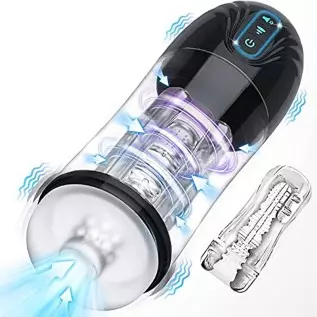
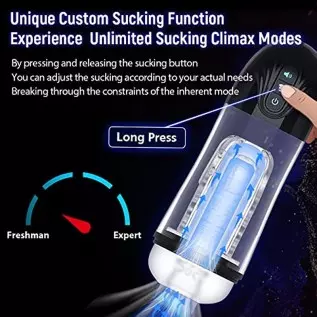
Automatic Male Masturbator, Sucking Male Masturbators Cup with 9 Suction & 10 Vibrating & Heating Mens Male Sex Toys, Hands Free
- -20%
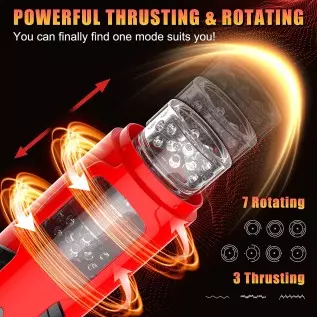
Automatic Male Masturbator, Sex Toy Male Masturbator Toy with 7 Thrusting & Rotating, Electric Pocket Pussy for Man Masturbation
- -20%