


Plaintiff appeals in first AIDS employment discrimination case
Experts worry that the defeat in the first instance has already misled the public into thinking that HIV-infected people cannot engage in normal work, thereby aggravating discrimination against this group of people. "This may set back our AIDS anti-discrimination work by decades!" Recently, Xiao Wu once again attracted public attention as the protagonist of "the first AIDS anti-discrimination case". At 3 p.m. on November 29, he went to the Anqing Intermediate Court through his agent and submitted an appeal on the spot.
Xiao Wu was originally a graduate of a normal university. He passed the written examination and interview in the 2010 teacher recruitment examination for municipal schools in Anqing City, Anhui Province. During the subsequent physical examination, he was refused admission by the education department because he tested positive for HIV. Subsequently, Xiao Wu took the Anqing Municipal Education Bureau and the Human Resources and Social Security Bureau to court.
On October 13 this year, the case was heard in the Yingjiang District Court of Anqing City, Anhui Province. On November 12, the court made a first-instance judgment rejecting the plaintiff Xiao Wu’s claim. Xiao Wu expressed dissatisfaction and was confident in the outcome of his future appeal. Through Yu Fangqiang, director of the Anti-Employment Discrimination Legal Aid Center of Beijing Yirenping Center, he repeatedly said: "Discrimination is a wall that requires many people to hit it one by one. ”
Previously, the Yingjiang District Court of Anqing City, Anhui Province issued an “Administrative Judgment” on the case, saying, “According to Article 18 of the General Medical Examination Standards for Civil Servant Recruitment (Trial), the plaintiff’s physical examination was not acceptable.” Qualified, does not meet the requirements of the Teachers Law for the physical conditions for the teaching profession." Yu Fangqiang questioned the results of the first instance judgment in an interview with Caixin reporters. He believes that, for now, China's laws, administrative regulations and the Ministry of Health do not explicitly restrict people living with HIV (hereinafter referred to as HIV) from engaging in teaching work. The "Teacher Law" applied by the court of first instance only stipulates the qualifications of teachers in principle, but does not restrict the qualifications of HIV-infected people. Therefore, from the perspective of legal application, the "Infectious Disease Prevention and Control Law", "Employment Promotion Law" and "AIDS Prevention and Control Regulations" are more applicable to this case.
Yu Fangqiang emphasized that Article 10 of the "Interim Provisions on Public Recruitment of Personnel by Public Institutions" clearly stipulates that "public institutions shall not set discriminatory conditions for open recruitment of personnel."
小Wu believes that the government’s recruitment practices, including the application of physical examination standards, must be conducted in accordance with the law and under the authority of the law. As of now, neither laws nor administrative regulations authorize the recruitment of teachers to apply or refer to the civil service physical examination standards. Therefore, it is "unbelievable" that the "Administrative Judgment" uses the "General Medical Examination Standards for Civil Servant Recruitment (Trial)" as the applicable standard.
Although Xiao Wu is full of expectations for the prospect of an appeal, Zhang Ke, a member of the Ministry of Health’s AIDS treatment expert group and an attending physician of infectious diseases at Beijing You’an Hospital, told Caixin reporters that judging from the current situation, he is not convinced about the outcome of the appeal. Be pessimistic.
At the same time, he is even more worried that the defeat in the first instance has already misled the public, thinking that people infected with HIV cannot engage in normal work, thereby aggravating discrimination against this group of people. "This may set back our anti-AIDS anti-discrimination work by several decades!" Zhang Ke said.
Lu Lu, a visiting researcher at the Civil Society Research Center of the Chinese University of Hong Kong, pointed out that in this case, Xiao Wu "had to" undergo an HIV test, which violated the internationally accepted norm of voluntary HIV testing. There were loopholes in the first-instance judgment. The rights of HIV-infected people to prohibit compulsory testing and strengthen privacy protection were not respected.
As an HIV-infected person who has been fired many times and publicly advertised for jobs, Ma Zhifa has been paying attention to the progress of the "First AIDS Anti-Discrimination Case." "No matter what the outcome of the appeal is, Xiao Wu is followed by nearly a million HIV-infected people. We should keep a normal mind, return to society, and find a new position!" Ma Zhifa said.
On November 29, Xiao Wu sent an open letter to Pu Cunxin and other domestic AIDS prevention and treatment ambassadors. In the letter, he stated that he would continue to "fight to the end" and shouted: "Infected people are not It’s scary, we can be teachers, we can do many kinds of jobs without being affected at all, please don’t exclude us from this society!”

- -15%
7.3 inch Soft Realistic Dildo, Human Safety Material, with Powerful Suction Cups, Suitable for Women/Men/Gay, Adult Toys for Wom


- -15%
9 Inch Silicone Realistic Dildo Soft Large Dildos for Women with Strong Suction Cup for Hands-Free, Flexible Dual Density Penis

- -15%
Realistic Dildo G Spot Stimulator- 8.2" Big Dildos with Suction Cup Adult Sex Toy for Women/Men/Gay, Flexible Clear Dildo for Wo


- -15%
Tentacle Realistic Dildo for Women: 8.7" Big Anal Dildo with Strong Suction Cup, Huge Monster Liquid Silicone Anal Plug Prostate

- -20%
Automatic Male Masturbators Cup, Male Masturbator Toy with 7 Thrusting & Rotating, 50dB Quiet Hands Free Pocket Pussy Stroker, 3
- -20%
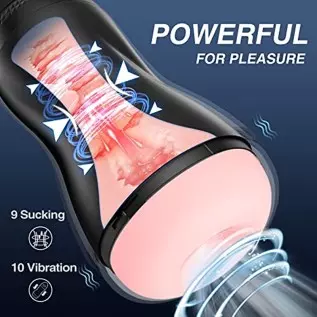
Automatic Male Masturbator, Sucking Male Masturbators Cup with 9 Suction & 10 Vibrating & Heating Mens Male Sex Toys, Hands Free

- -20%
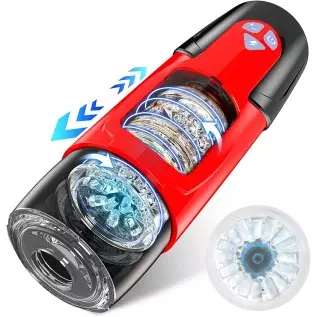
Automatic Male Masturbator, Sex Toy Male Masturbator Toy with 7 Thrusting & Rotating, Electric Pocket Pussy for Man Masturbation

- -20%

