


Medical abortion is actually a bit painful
Just like people would rather take medicine than have injections, and would rather have injections than surgery, if the problem can be solved by taking medicine, who would be willing to endure the huge pain of abortion surgery?
As an obstetrician and gynecologist, he is very busy at work every day. He has to write medical records, make ward rounds, perform operations, and deliver babies... It seems to be the easiest to go to the outpatient clinic. But I am most afraid of going to the family planning clinic.
"Doctor, I don't want this child. I want to have an abortion. No, I don't want surgery, I want to take medicine."
Among women who have abortions, choose medicine The vast majority have miscarriages! The reason is self-evident: just like people would rather take medicine than get an injection, and would rather get an injection than have surgery, if the problem can be solved by taking medicine, who would be willing to endure the huge pain of abortion surgery?
Many women believe that medical abortion is nothing short of good news for women. It eliminates the huge pain of uterine aspiration surgery and is very convenient; some people take it for granted that medical abortion is less harmful to the body than surgery. Some people even say: "It's like having a period." Of course, I believe many people have heard that there are often examples of incomplete abortions or failed abortions, but everyone would rather believe that they are non-existent than that they exist.
The failure rate of medical abortion is about 10%. Among the remaining 90%, 10% have incomplete abortions, but according to my clinical experience, the success rate cannot even reach this figure.
It is necessary to briefly explain the main process of medical abortion (I will say it again, I hope many people will read this article).
There are two main types of drugs used in medical abortion: Ru486 (the Chinese name is mifepristone) and misoprostol (a prostaglandin, don’t be afraid, it will not cause virilization in women).
The main function of the former is to change the hormonal environment of the endometrium, thereby destroying the growth environment of fertilized eggs; the latter can also destroy the environment of the endometrium and cause strong uterine contraction, forcing the gestational sac and decidua to be expelled in vitro.
For Ru486, different doctors may recommend different ways of taking it, but basically you should take 6 tablets within 3 days. After taking Ru486 on the third day, take 3 tablets of misoprostol.
That’s it. The whole process is like this.
But the truth is far from as easy as it sounds. All women preparing for medical abortion must be prepared to face the following five major risks:
1. Many people will experience vaginal bleeding within 24 to 48 hours after starting to take Ru486. Some people bleed a lot, even more than their usual menstrual flow. At this time, there will be a sense of fear; if there is insufficient preparation, it will inevitably lead to the embarrassing situation of penetration into the clothes; if the bleeding is large, there will also be symptoms of slight excessive blood loss, such as dizziness, pale lips, etc.
2. If you can pass this level, there is another level waiting for you: after taking misoprostol on the last day, most people will feel bursts of lower abdominal pain. Don't be nervous, it's just uterine contractions.
Although I have not experienced it, every time I see patients sitting in the corridor after taking misoprostol, I can feel that it is really painful. Because the changes in their facial expressions are really indescribable.
3. This is not the end, because misoprostol has the effect of contracting smooth muscles. When the uterus contracts, the gastrointestinal tract will inevitably turn upside down, and nausea and vomiting will follow one after another. Just when you are feeling so uncomfortable, my colleagues and I will definitely come to harass you, constantly asking you to "stand up and jump, you won't get down until you jump." "Drink more hot water, you will feel better." . ”
4. If everything goes well for you, within a few hours after the last dose, you will see something like a broken swim bladder (the size varies depending on the week of pregnancy). The stuff comes out along with a lot of blood clots, and then you have to take it to a doctor to see if it's a gestational sac.
If the doctor says: "Yes." Congratulations, this medical abortion is basically successful.
What does it mean to be basically successful? That is, if the miscarriage is complete, the bleeding will stop in a few days until the next menstrual period. If the miscarriage is incomplete, bleeding and dripping will continue. Then the only solution is to perform dilation and curettage surgery - which is more painful than abortion surgery.
5. If it doesn’t go well and the gestational sac is not discharged on the same day, there are two treatments: one is to have dilation and curettage immediately, which is very painful. The second is to go home and wait, very anxiously. If there are still no results after going home for observation (up to two weeks of observation), you still cannot escape the fate of dilation and curettage.
Of course, there are also cases that go very smoothly, with no bleeding or very little bleeding, which does not cause panic, and the gastrointestinal reaction is not serious while waiting; even the pain of uterine contractions is not very obvious; it is discovered after a few hours. The gestational sac is discharged. Simple, convenient and painless, what an ideal way to have an abortion. But how many are there like this? During the two months I was in the family planning clinic, I didn’t see much of her.
Some people have made statistics and believe that the failure rate of medical abortion is about 10%. Among the remaining 90%, 10% have incomplete abortions and must have dilation and curettage.
This number is already scary, but according to my clinical experience, the success rate cannot even reach this number. Only about 50% of people have a relatively smooth life, and very few of these people actually experience no pain.
There are many restrictions on medical abortion. For example, the number of days of pregnancy cannot exceed 47 days (the regulations of each hospital are different, but in short, the number of days cannot be too long). There must be no history of drug allergies, etc.
I would also like to clarify that medical abortion is by no means less harmful to the body than artificial abortion. Because it forces the endometrium to shed by affecting endocrine, it not only damages the endometrium, but also risks disrupting endocrine balance. If the secretion of sex hormones is out of balance, there will be many problems that will haunt you in the days to come.
After talking for a long time, maybe you will think that I am alarmist. In fact, as long as you sit in the family planning clinic for half a day and feel the same, you will understand. In my opinion, the success or failure of medical abortion is like a traffic light at a crossroads. You never know whether it will be a red light, a green light, or a yellow light when you arrive. Don't ask me or other doctors, no one can tell whether it is possible. In addition, even if you have had a successful medical abortion once, it does not mean that the next time it will be equally successful. On the contrary, it increases the likelihood of failure the next time.
It is better to prepare for a rainy day than to fix the problem before it is too late. I sincerely hope that we obstetricians and gynecologists will no longer be allowed to perform too many induced abortions.
This article comes from adult.6kmall.com and is published by netizens. This site only quotes it for reference. It does not mean that this site agrees with the views of the article. If you believe that the content and intellectual property rights of this article infringe upon your interests, please contact us.
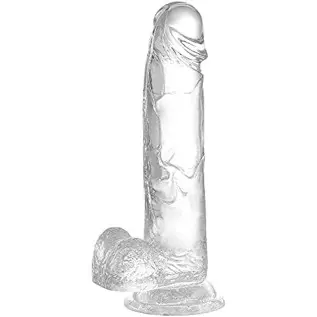

- -15%
7.3 inch Soft Realistic Dildo, Human Safety Material, with Powerful Suction Cups, Suitable for Women/Men/Gay, Adult Toys for Wom


- -15%
9 Inch Silicone Realistic Dildo Soft Large Dildos for Women with Strong Suction Cup for Hands-Free, Flexible Dual Density Penis
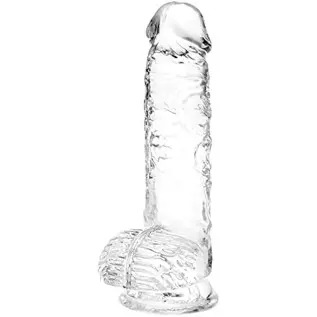

- -15%
Realistic Dildo G Spot Stimulator- 8.2" Big Dildos with Suction Cup Adult Sex Toy for Women/Men/Gay, Flexible Clear Dildo for Wo


- -15%
Tentacle Realistic Dildo for Women: 8.7" Big Anal Dildo with Strong Suction Cup, Huge Monster Liquid Silicone Anal Plug Prostate
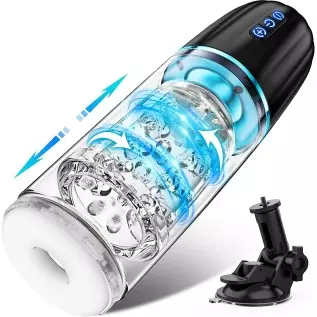
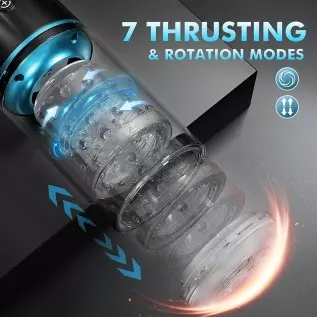
- -20%
Automatic Male Masturbators Cup, Male Masturbator Toy with 7 Thrusting & Rotating, 50dB Quiet Hands Free Pocket Pussy Stroker, 3
- -20%
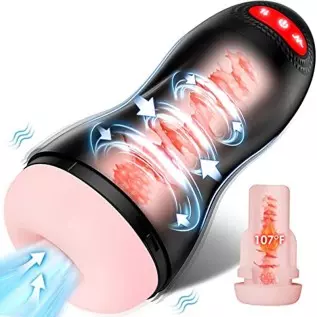
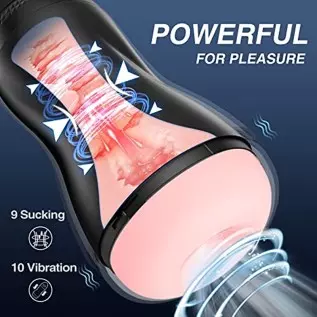
Automatic Male Masturbator, Sucking Male Masturbators Cup with 9 Suction & 10 Vibrating & Heating Mens Male Sex Toys, Hands Free
- -20%
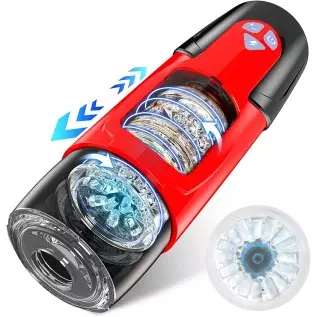
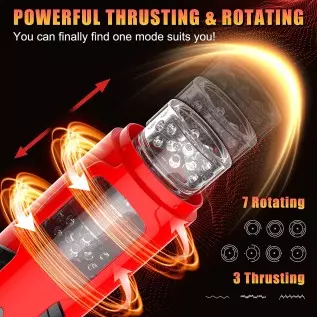
Automatic Male Masturbator, Sex Toy Male Masturbator Toy with 7 Thrusting & Rotating, Electric Pocket Pussy for Man Masturbation

- -20%