

Hutong Culture: Sexual Culture in Beijing’s “Red Light District”
Hutong Culture: Sexual Culture in Beijing’s “Red Light District”
There are countless hutongs in Beijing, but eight of them are famous both at home and abroad. Because back then, this place was synonymous with Tobacco Leaves, Flowers and Willow Lane.
The "Eight Hutongs" are located north of Xizhu Shikou Street and south of Tieshu Xiejie. From west to east they are: Baishun Hutong, Yanzhi Hutong, Hanjiatan, Shaanxi Lane, Shitou Hutong, Wangguangfu Xiejie, Zhujia Hutong, Li Shamao Hutong.
In fact, the "Eight Hutongs" that old Beijingers call do not specifically refer to these eight streets, but generally refer to the Dashilan area outside Qianmen, because in the alleys outside these eight streets, , there are also nearly a hundred brothels of various sizes. It's just that back then, most of the brothels in these eight alleys were first- and second-class, and the "grade" of the prostitutes was relatively high, so they were so famous.
The brothels in old Beijing were divided into several levels. The earliest brothels were located in the inner city, mostly for official prostitutes.
There are several alleys to the east of Dongsi South Street Road, which were once the residences of official prostitutes in the Ming Dynasty, such as Yanle Hutong, where the official prostitutes' band practiced and played music.
Ministry of the Interior Street was called Goulan Hutong in the Ming and Qing Dynasties. It was derived from the name of prostitutes and artists who sang and sang while holding on to the railings. From then on, "Goulan" became another name for the brothel.
During the Ming and Qing Dynasties, when officials and wealthy people had banquets, prostitutes were called to accompany them to drink, play music and sing. This was called "calling a note", and for prostitutes, it was called "giving a note".
At the end of the Qing Dynasty and the beginning of the Republic of China, brothels were mainly concentrated on Qianmenwai Street. Firstly, because it was close to the inner city, it was more convenient for officials to go out to enjoy themselves; secondly, there was a train station here, and tourists traveling from north to south There are many; third, Qianmenwai Street is a famous commercial street in Beijing, which is quite prosperous; fourth, this area is a gathering place for theaters, teahouses, and restaurants, where eating, drinking, and entertainment can be integrated into one.
According to statistics from the late 1930s, there were 117 registered brothels in the "Eight Hutongs" with more than 750 prostitutes at that time. These were only officially "listed" and not counted. "Wild prostitutes" and "secret prostitutes."
The prostitutes in old Beijing are divided into two types: the "Nan Class" and the "Bei Class". Generally speaking, the prostitutes in the "Nan Class" are mainly women from the Jiangnan area. They are of a higher grade. They are not only colorful but also Talented. Such prostitutes mostly accompany high-ranking officials, such as famous prostitutes Sai Jinhua and Xiao Fengxian in the capital. The prostitutes in the "Bei Class" are mainly women from the area north of the Yellow River. They have good looks but poor cultural quality. Most of the prostitutes in the "Eight Hutongs" are "Nanban", so they are mostly first- and second-class brothels. Most of the brothels in other areas are "Beiban". At that time, most of the people working as officials and doing business in the capital were from the south. Therefore, the "Eight Hutong" became a place where these dignitaries often visited.
The grades of the "Eight Hutongs" are also different. Baishun Hutong, Shaanxi Lane, Yanzhi Hutong and Hanjiatan are mostly first-class. The first-class brothel is also called "Qingyin Xiaoban". As the name suggests, "Qingyin" is mainly about drinking tea, talking about chess and drama, not just about flesh and blood business. Most of the prostitutes who come in and out of "Qingyin Xiaoban" are powerful people, and of course there are also literati.
Most of the brothels in Shitou Hutong are second-class, and second-class brothels are also called "teahouses."
Wang Guangfu Xiejie, Zhujia Hutong, and Li Shamao Hutong are mostly home to third-class brothels.
The names of first- and second-class brothels are mainly "yuan", "guan" and "ge", while the names of third- and fourth-class brothels are mostly "room", "class", "building" and "shop". ", "Xiachu" naming.
Walking into the current "Eight Hutongs", you can still appreciate the style of those years from the architecture of some old houses and buildings.
Baishun Hutong originally had Taiping Hall and Jintai Hall. The guild hall was later converted into a residence. It is said that Li Wenzao lived in this alley when he went to Beijing to meet Emperor Qianlong. Nowadays, the old houses in this alley are relatively well preserved. The brothels that were arranged in sequence from the west entrance of the alley include Xiaoxiang Pavilion, Meijin Yuan, Xinfeng Yuan, Fengming Yuan, Xinyage, Shihua Pavilion, Lanxiangban, Songzhu Pavilion, Quanxiang Class, Qunfangyuan, Meifengyuan, etc.
Hanjiatan is now called Hanjia Hutong. According to historical records, during the Kangxi period, the famous dramatist Li Yu (also known as Li Weng) once lived here. After the "Four Anhui Troupes" came to Beijing, the Sanqing Troupe was located in Hanjiatan, and the Liyuan Guild of old Beijing was located in No. 36 Courtyard. This alley is mostly home to "Nanban" brothels, of which more than 20 are famous, including Huancai Pavilion, Jinmei Building, Manchun House, Jinfeng House, Yanchun House, Meixian House, and Qingyuanchun House.
There were 16 first-class brothels in Shaanxi Lane at that time. Among them, Yixiangyuan, which was owned by Sai Jinhua, a famous prostitute in the late Qing Dynasty, is the most famous. The architecture and layout of this brothel are now well preserved. Sixi Troupe, one of the "Four Anhui Troupes", was once located in this alley.
Rouge Hutong, formerly known as Rouge Lane, connects Baishun Hutong to the north and Zhushikou West Street to the south. There are more than 10 first-class brothels in Rouge Hutong, among which the Flower Shop is a large quadrangle with three entrances and a cross-courtyard, occupying almost half of the alley. According to Mr. Li Jinlong's research, during the Ming Dynasty, this courtyard was called the Su Family Courtyard, and the famous prostitute Su San (Yutang Chun) once lived here. Its main entrance has undergone several changes and is now the Baishun Hutong Neighborhood Committee.
The south entrance of Shitou Hutong is on Xizhu Shikou Street and the north entrance is on Tieshu Xiejie. In the late Qing Dynasty, there were Wangjiang Guild Hall and Longyan Guild Hall, which were a gathering area for second-class brothels. This alley is relatively long and has 24 second-class brothels. The famous ones include Tea House, Sanfu Class, Sihai Class, Guixiyuan, Guiyin Class, Yunliang Pavilion, Jinmei Inn, etc. Nowadays, almost all of them have become residential buildings.
Wang Guangfu Xiejie, now called Palm Tree Xiejie, connects Da Li Sha Mao Hutong and Xiao Li Sha Mao Hutong to the east and Shitou Hutong to the west. The houses in this alley are relatively dilapidated.
In the past, third-class brothels were concentrated here. The famous ones include Jiuxiang Teahouse, Juqianyuan, Guixiangyuan, Shuangjinxiachu, Quanlexiachu, Yuelaidianxiachu, etc. Li Shamao Hutong was originally divided into two alleys: Da Li Shamao and Xiao Li Shamao. Now it has been changed into Dali Hutong and Xiaoli Hutong. Xiaoli Shamao is one of the "Eight Hutongs". This alley is not big, with a total of 21 house numbers, but in old Beijing, brothels occupied nearly 20 yards. The brothels here are mainly third-rate, and the famous ones include Shuangfeng Tower, Xinmei Tower, Yongquan Courtyard, Tianshun Tower, Quansheng Tower, Lianshengdianxiachu, etc. Because this alley is close to some theaters and restaurants, there are also several second-class brothels.
Zhujia Hutong was once divided into Liuweiwei Hutong and Yangmao Hutong in the early days. There are more than 20 third-class brothels in this alley, the famous ones are Yichun Building, Lushengyuan, Hongshunxiachu, etc. Qingfeng Alley, Qingfengjiadao, Zhumao Hutong, Yanjia Hutong, and Xiyangmao Hutong, which are connected to Zhujia Hutong, were also gathering places for third- and fourth-class brothels and tuyaozi in old Beijing, but they are not as famous as the "Eight Hutongs" big.
The wind is always blown away by the rain and wind. The red and fragrant Fireworks Willow Lane in the past has long become a historical relic. Fortunately, because there are too many old houses in the "Eight Hutongs", it is difficult to renovate them, so the renovation of dilapidated houses in Beijing has not yet set foot here, so when the streets are full of construction projects, Only then can it be preserved.
The speckled corners are still revealing their secrets. On this sunny late autumn morning, the sun shines through the smoke and dust that has lingered for hundreds of years, illuminating these old houses. . The old house is silent, knowing that the endless truth is the vicissitudes of life.
- -15%
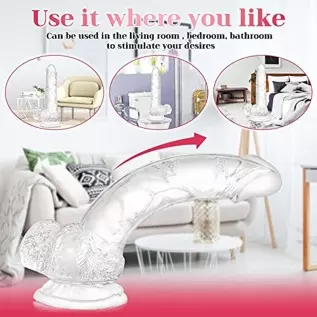
7.3 inch Soft Realistic Dildo, Human Safety Material, with Powerful Suction Cups, Suitable for Women/Men/Gay, Adult Toys for Wom
- -15%
9 Inch Silicone Realistic Dildo Soft Large Dildos for Women with Strong Suction Cup for Hands-Free, Flexible Dual Density Penis

- -15%
Realistic Dildo G Spot Stimulator- 8.2" Big Dildos with Suction Cup Adult Sex Toy for Women/Men/Gay, Flexible Clear Dildo for Wo

- -15%
Tentacle Realistic Dildo for Women: 8.7" Big Anal Dildo with Strong Suction Cup, Huge Monster Liquid Silicone Anal Plug Prostate

- -20%
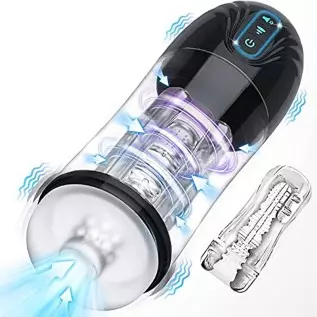
Automatic Male Masturbators Cup, Male Masturbator Toy with 7 Thrusting & Rotating, 50dB Quiet Hands Free Pocket Pussy Stroker, 3

- -20%
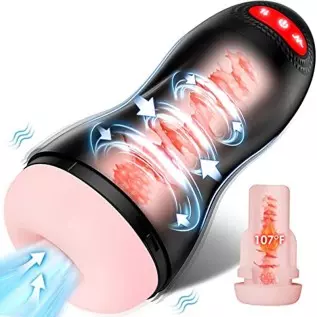
Automatic Male Masturbator, Sucking Male Masturbators Cup with 9 Suction & 10 Vibrating & Heating Mens Male Sex Toys, Hands Free

- -20%
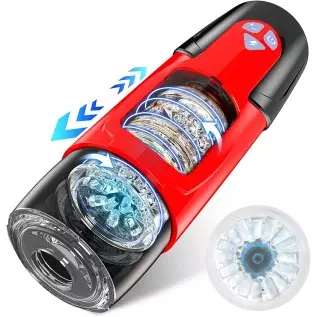
Automatic Male Masturbator, Sex Toy Male Masturbator Toy with 7 Thrusting & Rotating, Electric Pocket Pussy for Man Masturbation

- -20%